
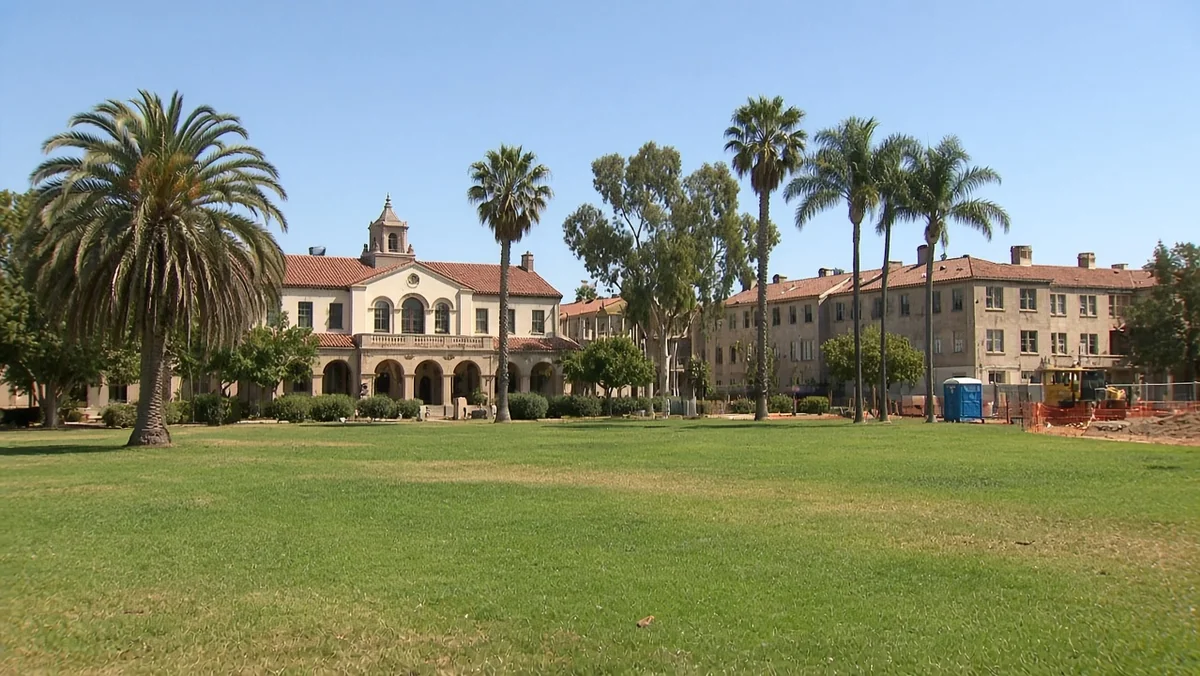
COSTA MESA, Calif. — Costa Mesa City Council voted 7-0 near midnight Tuesday, Sept. 15, 2026, to approve a land-use framework for the former Fairview Developmental Center that sets a minimum of 2,300 homes—including 920 affordable units, of which 200 are permanent supportive housing, plus 690 moderate-income homes—while still allowing a path toward as many as 4,000 units on the state-owned Harbor Boulevard site.
Thrive News summarized the central caveat residents need to hear first: the plan establishes rules for transforming the property. It does not select a developer, approve architectural plans, or authorize construction. California’s Department of General Services will oversee master-developer selection because the land remains state-owned.
What the framework actually locks in
Reporting on the adopted package describes roughly 95 acres along Harbor Boulevard, with commercial space discussed from about 15,000 up to 35,000 square feet and open space from about 14 to 25 acres depending on the alternative. Mayor John Stephens’ alternative that council embraced centers on 2,300 homes, about 15,000 square feet of commercial space, and about 25 acres of open space—and keeps a secondary access road off Mesa Linda Golf Course. If another access is required, officials said the city will prioritize negotiating Merrimac Way.
The lower unit count answered neighbors who spent a five-hour hearing worrying that 4,000 dwellings would overwhelm traffic and nearby neighborhoods. Stephens said he could not support that density; Councilmember Mike Buley called the quality-of-life trade-off “extremely difficult to thread.” Applause followed the unanimous vote.
State housing pressure, not a groundbreaking
Costa Mesa’s housing element aims for 11,760 new units by 2029, and a state lawsuit over that element loomed over Tuesday’s hearing. Fairview was counted for at least 2,300 homes with a high affordability share. Planners have warned that 2,300 units with 920 affordable homes may not pencil without density bonuses—feasibility talk has pointed toward 3,500–4,000 units—yet council kept the 920 affordable figure.
Councilmember Manuel Chavez said his job is not to guarantee a developer’s profit. Future design, traffic, infrastructure, and environmental hearings still lie ahead after a state-selected developer arrives. Portions of the campus also remain reserved for a state emergency-operations center and housing serving people with developmental disabilities.
California housing fights travel in packs
Fairview’s framework sits beside other West Coast and national supply fights Never Late News tracks—from SANDAG’s SB 79 Oceanside–Solana Beach lawsuit over transit-centered density, to Salt Lake City’s push for expanding housing options, Jacksonville’s debates over an affordable housing trust fund, and coastal towns using tools like Port Royal’s housing moratorium. Costa Mesa’s vote is a rules vote: how many homes, how much affordability, and which streets and open spaces absorb the change—before any crane arrives.
Why this matters
At least 2,300 homes on a closed state care campus is one of the largest redevelopment bets in Costa Mesa’s modern history, and 920 affordable units—including 200 supportive homes—speak directly to rent-burdened and disabled residents. Neighbors who feared 4,000 units won a lower floor and a golf-course access alternative, but they did not stop future density bonuses or a later climb toward 4,000. Because DGS—not City Hall—picks the master developer, the next accountability moments are state procurement and subsequent city design hearings, not a ribbon-cutting this month. Households on Harbor Boulevard and Mesa Verde should treat Tuesday’s 7-0 vote as a zoning compass, not a construction calendar.
How Never Late News reported this
Never Late News based this report on Thrive News coverage of the Fairview framework and corroborating local accounts of the Sept. 15 meeting: the 7-0 vote near midnight; 2,300-home minimum with a path up to 4,000; 920 affordable homes including 200 permanent supportive and 690 moderate-income units; roughly 95 acres of state-owned Harbor Boulevard land; commercial and open-space ranges in the alternatives; Mayor John Stephens’ plan avoiding a golf-course access road and prioritizing Merrimac Way if needed; the 11,760-unit housing-element goal by 2029; state lawsuit pressure; and the point that Department of General Services—not the city—selects the master developer and that construction is not approved. We did not invent a developer, groundbreaking date, or unadopted traffic results. Confirm documents through the City of Costa Mesa and state FDC reuse materials.
Corrections and reader feedback
If you spot an error in this report, email tips@neverlatenews.com. We correct the record promptly and note substantive updates at the bottom of the story when needed. Planning references: City of Costa Mesa Fairview Developmental Center reuse materials. About Never Late News: neverlatenews.com/about.
1 thought on “Costa Mesa Fairview housing plan: 2,300 homes approved, up to 4,000 later”
Comments are closed.