
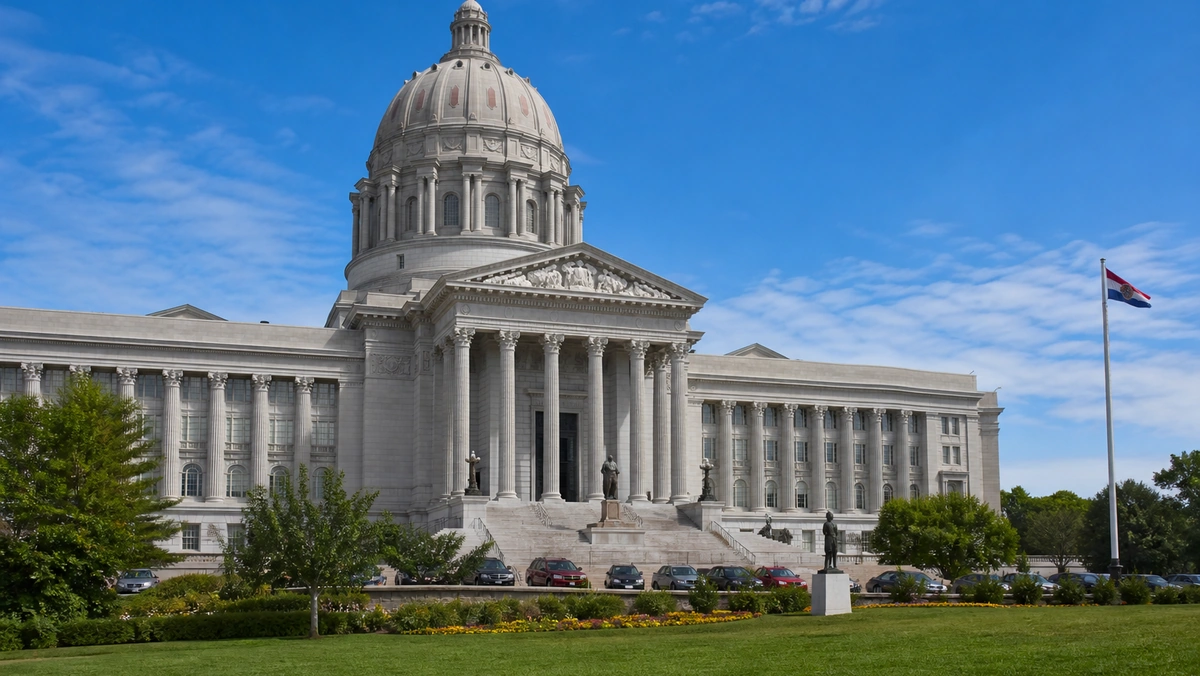
JEFFERSON CITY, Mo. — The Missouri congressional map dispute means Missouri’s Supreme Court has unanimously blocked a new congressional map from being used in the November 2026 general election and ordered a statewide vote on whether to keep the districts.
According to Associated Press reporting (Associated Press reporting) and the court’s own order, the 2022 congressional map remains in force for November unless voters later approve the newer map passed by the Republican-led Legislature.
What the Missouri congressional map decision means
In decisions handed down around Sept. 3, 2026, the court ruled that a referendum petition challenging House Bill 1 was legal, sufficient, and timely. Because opponents filed the petition before the law’s effective date, the court said HB 1 never took effect.
The court ordered Secretary of State Denny Hoskins to certify the referendum and place it on the November 2026 ballot, with steps required before a Sept. 8 deadline noted in court coverage.
Why the Missouri congressional map fight matters nationally
Republicans had hoped the new boundaries could help them win an additional U.S. House seat and protect a slim national majority. AP reported that the new districts were used in August primaries, but the state Supreme Court said they cannot be used in the November general election unless voters first uphold them.
That outcome is a notable local check in a year when several states have redrawn maps with midterm control of Congress in view.
What happens next for Missouri voters
Missourians will decide the referendum in November. If voters approve HB 1, reporting from Missouri legal outlets says the new map would take effect after the election on the timeline set by state law. If voters reject it, the 2022 map remains the governing map.
Separate coverage has also noted that state officials have explored further legal options, including possible emergency relief requests beyond Missouri’s courts. Those steps can change quickly; Never Late News will update if a higher court alters the schedule.
Why this matters
Congressional lines decide which communities share a representative and how competitive districts become. For Missouri voters, the Missouri congressional map dispute is not abstract: it determines which ballot lines appear in November and whether a mid-decade remap survives public review.
Election administrators now face a compressed timetable. County clerks must explain which district boundaries apply, update voter-facing materials, and coordinate with candidates before ballots are finalized. The referendum process also gives voters a direct role in deciding whether the replacement boundaries should survive, while the court order preserves the status quo for the immediate general election.
Voters can check their registration, polling location, and sample ballot through the Missouri secretary of state and their local election authority. Candidates and campaigns will need to review filings against the map that is legally operative for November, not merely the boundaries used during the earlier primary. Those practical steps matter because a map dispute can create confusion even when the court’s central holding is clear.
The ruling’s immediate effect is straightforward: the prior map remains the reference point for the general election unless the referendum changes the legal landscape later. Officials, voters, and campaigns should rely on current state guidance as deadlines approach.
How Never Late News reported this
Never Late News based this story on Associated Press reporting from Jefferson City, Missouri legal-press summaries of the Sept. 3 rulings, and publicly posted excerpts of the Supreme Court of Missouri order in case SC101805. The desk was not in the courtroom and did not invent petition-signature totals beyond those reported by wire and court-adjacent coverage.
Corrections and reader feedback
Send corrections through our Contact page. We log updates under Corrections. Standards are explained in our Editorial Policy and About pages.