
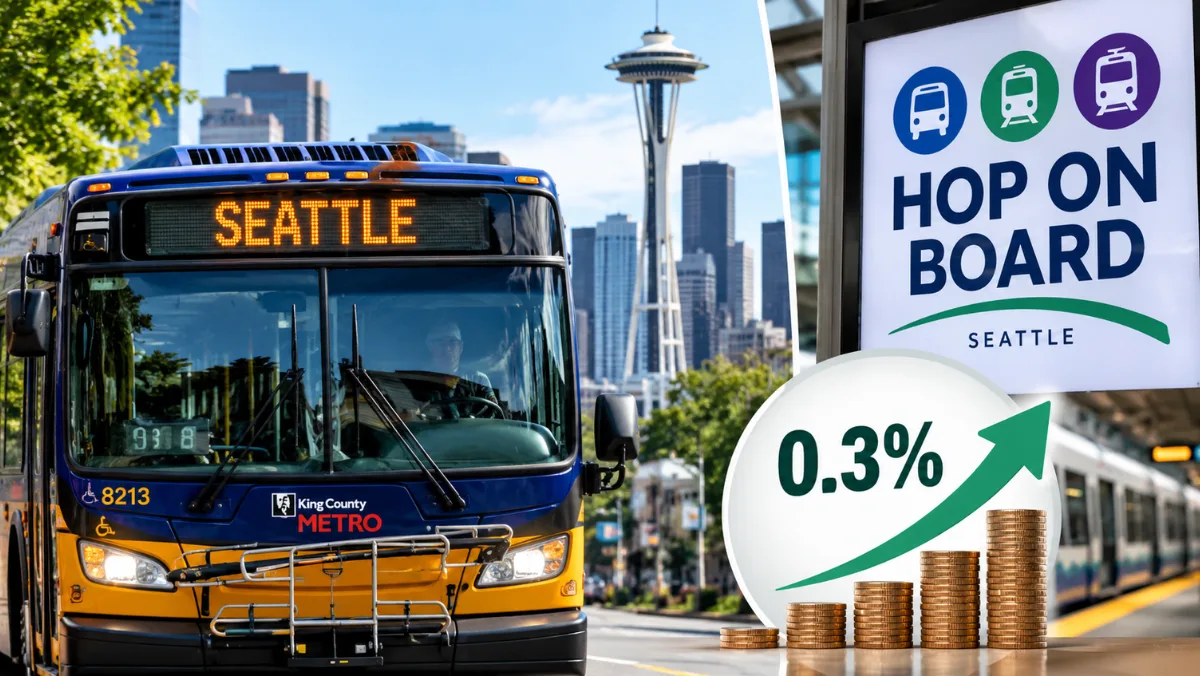
SEATTLE — Transit advocates formally launched the “Hop On Board!” campaign on Friday, Sept. 12, 2026, urging Seattle voters to approve renewal and expansion of the Seattle Transit Measure on the November ballot—a package that would double the local sales tax dedicated to transit from 0.15% to 0.3% and raise about $138 million a year over a decade.
Seattle Transit Blog reported that speakers at the kickoff included Mayor Katie Wilson, Councilmember Alexis Mercedes Rinck, Amalgamated Transit Union Local 587 President Greg Woodfill, Nondrivers Alliance founder Anna Zivarts, Transit Riders Union General Manager Lam Ho, and Transportation Choices Coalition leaders Kirk Hovenkotter and Katy Ricchiuto. The Transportation Choices Coalition is leading local advocates pushing the expansion.
What the measure would fund
According to seattle.gov’s council briefing on the 2026 Seattle Transit Measure renewal, the City Council unanimously placed the 10-year package on the November 2026 ballot after approving amended legislation in July. Mayor Wilson’s proposal doubles the sales tax to 0.3%—the maximum allowed under recently adopted state law—and is expected to average roughly $138 million annually. Most of the money would buy extra bus trips; the package also doubles free ORCA cards for riders who need them most and funds accessibility programs and transit capital such as bus lanes.
Seattle Transit Blog notes that the current measure already funds more than 7% of bus trips running in Seattle, especially daytime corridor boosts and much of Metro’s Night Owl service inside the city. The expanded measure would further strengthen night and weekend service. City Council materials describe a jump from about 180,000 bus trips a year under the expiring measure toward roughly 280,000 trips—about a 47% service expansion—if voters approve.
If passed, the renewed measure would take effect in April 2027, replacing the 2020 Seattle Transportation Benefit District measure that expires that month.
Why advocates are framing it as freedom—and urgency
At the kickoff, Mayor Wilson emphasized late-night buses for service workers who otherwise face rideshare bills after late shifts, and the chance for some two-car households to drop to one car. Councilmember Rinck highlighted frequent service and expanded late-night options. Woodfill argued that even though sales taxes are regressive, the dollars return to riders who need service most. Zivarts, speaking for people who cannot drive, put the case bluntly: “transit is freedom,” according to Seattle Transit Blog’s account.
Those arguments sit alongside practical politics. Sales-tax ballot measures often draw opposition over grocery and everyday costs even when proceeds are earmarked for buses. Campaign organizers are already warning supporters to expect a fight through Election Day.
How Seattle’s vote fits a wider mobility map
Cities across the country are pairing housing and transit fights—whether Seattle’s bus purchases, Atlanta’s BeltLine rail resolution, New York’s Interborough Express renderings, or local affordable housing trust debates. Reliability also shapes how people experience airports and regional travel when weather or staffing squeezes the system, a theme familiar from recent Labor Day airport delay coverage. Seattle’s November vote is narrower: a city sales-tax renewal with a published service and ORCA package.
Why this matters
The Seattle Transit Measure is not an abstract levy. It decides whether Night Owl and weekend buses grow, how many free ORCA cards go out, and whether bus-lane capital keeps pace with demand after the current measure expires in April 2027. Voters who ride Metro, transfer to Link, or simply share roads with buses have a direct stake in the 0.3% rate and the $138 million annual envelope. The Hop On Board launch marks the start of the persuasion campaign—not the end of the debate.
How Never Late News reported this
Never Late News summarized the Sept. 12 Hop On Board campaign kickoff as reported by Seattle Transit Blog and the Seattle City Council / seattle.gov pages on the 2026 Seattle Transit Measure renewal, including the unanimous July ballot referral, the 0.15% to 0.3% sales-tax increase, the roughly $138 million annual revenue estimate, April 2027 effective timing, and service/ORCA investment descriptions published by those sources. We did not invent ridership forecasts, opposition spending totals, or Election Day results. Ballot language and spending plans can still be clarified in official voter pamphlets—check King County elections materials before voting.
Corrections and reader feedback
If you spot an error in this report, email tips@neverlatenews.com. We correct the record promptly and note substantive updates at the bottom of the story when needed.