
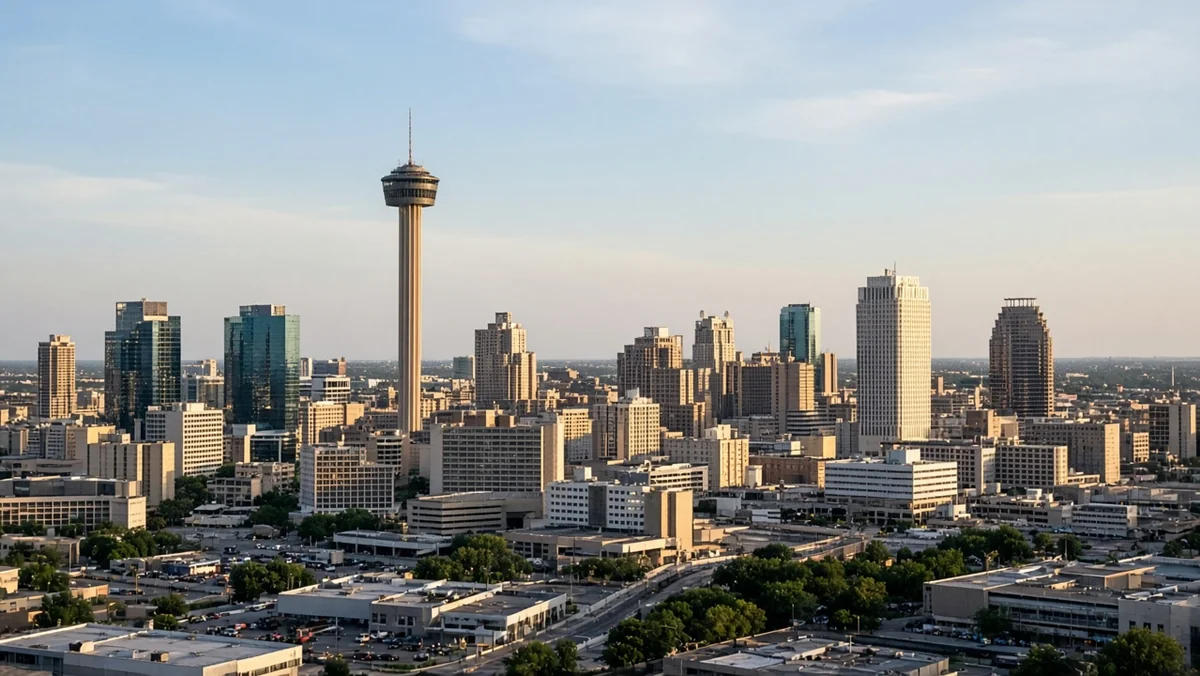
SAN ANTONIO — San Antonio City Council is scheduled to vote Thursday, Sept. 17, 2026, on the fiscal year 2027 budget and property-tax ordinances that would raise the combined rate from 54.159 cents to 56.288 cents per $100 of taxable value—an increase of 2.129 centsif seven of 11 members support it. City officials and local reporting describe the move as San Antonio’s first property-tax rate hike in more than 30 years.
San Antonio Report coverage of the divided council, citing Budget Director Freddie Martinez, underscored the hard threshold: a tax increase needs 60% support, meaning seven votes. Without those seven, Martinez said, the property-tax rate would stay at the current level and staff would have to revise the budget.
The shortfall and the package on the table
City materials and contemporaneous reporting put General Fund pressure at roughly $158 million through FY2028, driven by rising costs, softer property values, and state limits on local revenue growth. The proposed plan pairs about $89.6 million in spending cuts across FY2027 and FY2028 with the higher tax rate and fee adjustments.
City estimates say the average homeowner would pay about $2.95 more per month. The same package includes about $156.4 million in property-tax relief through homestead exemptions and tax freezes for seniors and homeowners with disabilities—figures residents should check against their own notices.
Fee proposals include a 75-cent increase on garbage carts and a 25-cent increase in the environmental fee until council adopts final ordinances.
Why seven votes matter more than a simple majority
Council has passed other budgets without every member’s support. A rate hike is different. San Antonio Report reported that three membersCouncilwoman Marina Alderete Gavito (D7), Marc Whyte (D10), and Misty Spears (D9)—voted against an Aug. 13 procedural step that let staff explore a tax increase. If two more join them against the hike, the rate stays flat and staff must rebuild the plan.
City Manager Erik Walsh has warned general-fund cuts are constrained because so much day-to-day service sits in that fund. An Aug. 19 alternative-cut exercise listed painful options such as summer youth programs, pavement markings, and home-repair aid. City briefings ahead of Sept. 17 also warned that staying at the current rate could require tens of millions more in cuts beyond the proposed $89.6 million package.
Mayor Gina Ortiz Jones has publicly framed a tax increase as a last resort after months of work sessions, while arguing the council must show residents it exhausted other options. She has floated restorationslibrary funding, maternal health, senior-center programs—by cutting elsewhere. Whether those amendments survive Thursday’s package is part of what the vote will settle.
Local budgets, same national pattern
San Antonio’s ledger fight rhymes with other U.S. cities choosing between household tax bills and service maps. Miami-Dade’s same-week debate over bus cuts and a Metromover fare shows how riders feel budget math first. Charlotte’s reconsideration of I-77 South Express Lanes after a multimillion-dollar repayment threat shows how state and local finance collide. Mayoral agendas such as Chicago’s Brandon Johnson announcement watch and tools like Jacksonville’s affordable housing trust fund ask the same question: who pays, who is protected, and what gets cut when growth slows.
Why this matters
A 2.129-cent rate increase is not abstract for homeowners watching appraisals and exemptions. Seven votes decide whether the city closes a ~$158 million two-year gap with the proposed mix of cuts, fees, and the first rate hike in decades—or whether staff must revise the budget with deeper service cuts. Homestead, senior, and disability freezes in the $156.4 million relief package matter only if residents confirm they qualify. Garbage and environmental fee hikes, if adopted, hit monthly bills for renters and owners alike.
How Never Late News reported this
Never Late News based this report on San Antonio Report coverage of the divided council and tax-hike threshold, plus city and local budget summaries of the Sept. 17 FY2027 vote: the proposed rate change from 54.159 to 56.288 cents per $100 (+2.129), the seven-of-11 / 60% requirement, the ~$158 million shortfall through FY2028, about $89.6 million in proposed cuts, ~$2.95 per month for the average homeowner, about $156.4 million in homestead/senior/disability relief, proposed garbage-cart (+75¢) and environmental-fee (+25¢) increases, and comments from Mayor Gina Ortiz Jones, City Manager Erik Walsh, and Budget Director Freddie Martinez. We did not invent a final tally or enact unadopted cuts. Confirm ordinances on the City of San Antonio agenda after the Sept. 17 meeting.
Corrections and reader feedback
If you spot an error in this report, email tips@neverlatenews.com. We correct the record promptly and note substantive updates at the bottom of the story when needed. City agenda and livestream references: sanantoniotx.new.swagit.com (Sept. 17 City Council A Session). About Never Late News: neverlatenews.com/about.
2 thoughts on “San Antonio property tax: Council votes Sept. 17 on first hike in 30+ years”
Comments are closed.